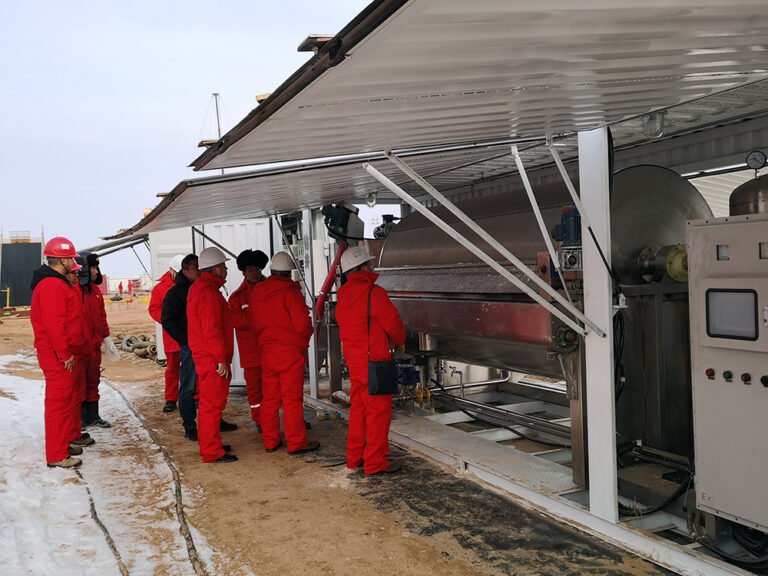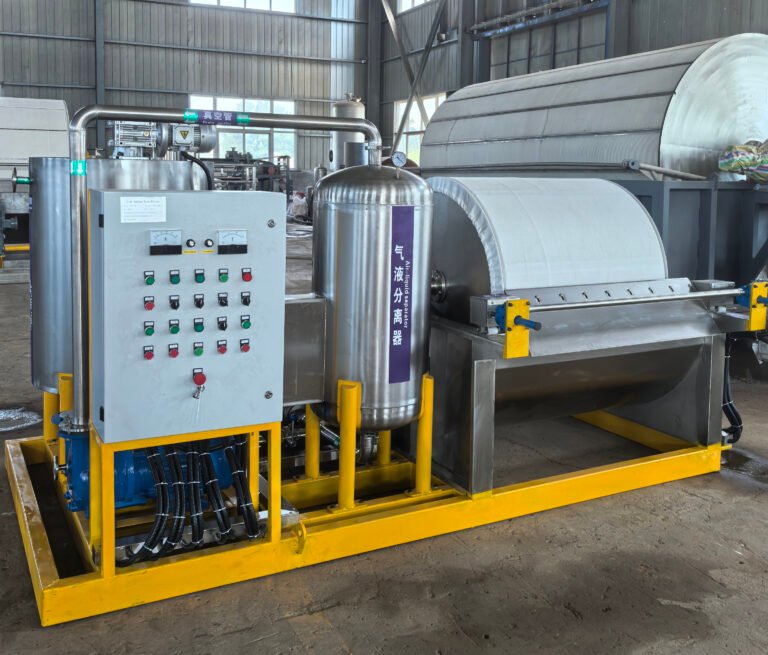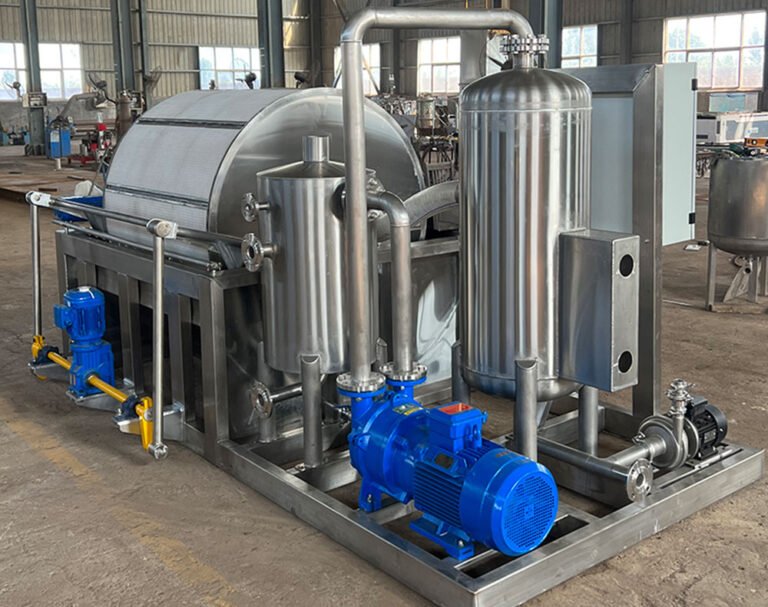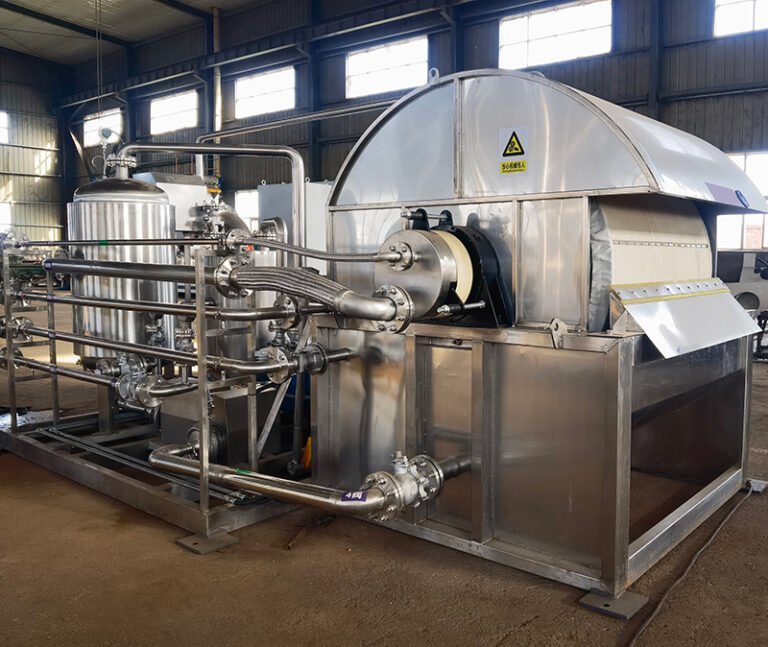
If you need to design the perfect RVDF for your operating conditions, you should contact a professional manufacturer. They will design the optimal rotary vacuum drum filter tailored to your specific slurry properties, process requirements, and plant layout.
1.Let the vacuum drum filter manufacturer know about your slurry characteristics.
Before you contact the RVDF manufacturer, they’ll either have you fill out a slurry questionnaire or talk through the key details of your slurry properties with you. The main slurry properties they focus on are listed below:
Slurry name
Knowing the slurry name is a core prerequisite, as it directly determines the material selection, structural design, and process parameter settings for the equipment. This ultimately affects the filtration efficiency, service life, and operational stability of the equipment. The specific reasons are as follows:
1. Determine contact materials to prevent corrosion/wear/contamination.
The chemical properties (acidity/alkalinity, corrosiveness) and physical properties (hardness of solid particles, abrasiveness) of different slurries vary significantly, necessitating the selection of corresponding contact materials:
- If the slurry is a highly corrosive medium (such as acidic or alkaline waste liquids in the chemical industry, or electroplating wastewater), the drum, filter cloth, and distribution head must be made of 316L stainless steel, titanium alloy, or rubber/fluoropolymer-lined materials to prevent rapid corrosion and equipment failure.
- If the slurry contains high-hardness abrasive particles (such as mining tailings slurry or ceramic raw material slurry), wear-resistant carbon steel with a polyurethane coating must be used, or wear-resistant filter cloth must be selected to prevent premature wear of the drum wall and filter cloth.
- If the slurry consists of food/pharmaceutical-grade materials (such as fruit juice, fermentation broth, or pharmaceutical intermediates), food-grade 304 stainless steel must be used and must comply with sanitary standards (e.g., dead-end-free design) to prevent material contamination.
Without knowing the name of the slurry, it is impossible to determine its corrosiveness, abrasiveness, and sanitary requirements. Material selection would be entirely blind, potentially leading to corrosion leaks, material contamination, or rapid wear and failure after equipment commissioning.
2. Match the filter cloth type to ensure filtration efficiency and separation effectiveness.
Filter cloth is the core consumable of RVDF, and its material, pore size, and weaving method must precisely match the characteristics of the slurry:
- For fibrous slurries (e.g., paper black liquor), select synthetic filter cloths with high air permeability to prevent clogging;
- For fine-particle slurries (e.g., pigment slurry, catalyst slurry), microporous filter cloths must be selected to ensure complete solid-liquid separation;
- For highly viscous slurries (e.g., starch slurry, sludge slurry), smooth-surface filter cloths must be selected to facilitate filter cake release.
Slurry name directly corresponds to key parameters such as particle size, viscosity, and hydrophilicity/hydrophobicity, serving as the sole basis for filter cloth selection.
3. Set core process parameters to optimize operational performance.
The filtration characteristics of different slurries—such as filter cake formation rate, required filter cake moisture content, and difficulty of back-blow cake detachment—vary, necessitating tailored process parameter settings:
- For slurries prone to forming filter cakes (such as mineral processing tailings slurry), increasing the drum rotation speed can enhance processing capacity.
- For viscous slurries that are difficult to filter (such as chemical sludge), reduce the rotational speed, extend the filtration time, or incorporate a pre-coating process.
- For slurries requiring high moisture content in filter cakes (such as coal dewatering), parameters like vacuum level and back-blow pressure must be adjusted.
The configuration of these parameters must be based on the fundamental properties of the slurry, and the slurry name serves as the direct entry point for obtaining these properties.
4. Mitigate specific risks and comply with industry regulations
Some slurries possess characteristics such as flammability, explosiveness, toxicity, and hazardous properties (e.g., organic solvent slurries, heavy metal-containing slurries). When customizing equipment, additional safety protection structures must be designed:
- Flammable and explosive slurries require explosion-proof motors and anti-static filter cloths; equipment must be grounded.
- Toxic and hazardous slurries require enhanced sealing designs to prevent leakage and environmental contamination.
These special requirements must be considered based on the hazardous properties corresponding to the slurry name; otherwise, serious safety hazards may arise.
Solids Concentration
Confirming the solid concentration in slurry is equally important as knowing the slurry name. It serves as a critical basis for designing core filter parameters, directly determining the equipment’s processing capacity, structural selection, and operating costs. The specific reasons are as follows:
Why is it necessary to confirm the solid concentration?
Determine the key parameters for RVDF throughput and drum performance
Solid concentration (typically expressed as mass fraction or volume fraction) directly determines the solid content per unit volume of slurry.
- If the solid concentration is excessively high (e.g., tailings slurry concentration >40%), the slurry exhibits high viscosity and poor flowability. This necessitates designing drums with larger diameters and lower rotational speeds, coupled with a high-power agitator to prevent sedimentation and clumping within the feed trough.
- If the solid concentration is too low (e.g., chemical wastewater concentration <5%), the drum rotation speed must be increased to enhance treatment efficiency. Concurrently, the drum length can be reduced to lower equipment manufacturing costs.
Without solid concentration data, equipment throughput will deviate significantly from actual requirements—either resulting in insufficient processing capacity or excessive energy consumption.
Matching Vacuum Systems with Filter Cake detachment Design
The formation rate and thickness of the filter cake are directly related to the solid concentration.
- High-concentration slurry readily forms thick filter cakes, requiring higher vacuum levels to ensure effective cake dewatering. Simultaneously, the backflush system pressure must be increased to guarantee smooth cake separation.
- Low-concentration slurry produces thin and loose filter cakes. Excessive vacuum pressure may cause filter cloth clogging, necessitating a reduction in vacuum parameters and optimization of filter cloth pore size to prevent solid phase penetration.
Predictive analysis of operating costs and consumable lifespan
Solid concentration affects filter cloth wear rate and replacement frequency: Higher-concentration slurries involve more intense particle collisions and friction, requiring wear-resistant filter cloths; lower-concentration slurries cause less wear, allowing for cost-effective standard filter cloths. Confirming concentration in advance enables precise calculation of future consumable costs.
How to measure the solid concentration of slurry?
Testing methods must balance accuracy and convenience, with the following four commonly used approaches:
1.Volume method—simplest, but not precise
This is the fastest method, but it is not precise and can only provide a rough estimate of the solid content.
Operating Steps
- Pour the slurry into a transparent container and measure the height H of the slurry.
- After allowing the slurry to stand for 24 hours, measure the height of the solid particles that have settled at the bottom of the container.
- Calculate Solid Concentration: Solid Concentration=h/H*100%.
2.Weight Method (Drying Method) — Laboratory Precision Measurement
This is the most classic and accurate method, suitable for precise testing prior to customizing equipment.
Operating Steps
- Weigh a specific mass of uniform slurry (denoted as m1) using a balance.
- Pour the slurry into a weighed-out evaporating dish (recorded as m₀).
- Place in an oven and dry at 105–110°C until constant weight is reached (recorded as m2).
- Calculate the solid concentration: Solid Concentration=(m2-m₀)/m1*100%.
3.Density Meter Method — Rapid On-Site Estimation
Utilizing the principle that “slurry density is positively correlated with solid concentration,” it is suitable for rapid on-site testing.
Operating Steps
- Measure the actual density of the pulp using a hydrometer.
- Consult the density-concentration reference table for the corresponding slurry (requires prior calibration using the gravimetric method).
- Directly read the solid concentration value.
4.Online Concentration Meter Method — Real-Time Production Monitoring
Suitable for continuous production scenarios, it provides real-time feedback on slurry concentration changes, facilitating dynamic parameter adjustments for equipment.
Operating Steps
- Utilizing ultrasonic or near-infrared spectroscopy technology, the solid concentration is calculated by detecting the reflection and transmission characteristics of the slurry against sound waves/light waves.
Size and proportion of slurry solid particles
The size and proportion of solid particles in the slurry are the core parameters determining the selection of filter cloths, filtration processes, and equipment structural design for VDF.
Why is it necessary to confirm the Size and proportion of slurry solid particles?
Precisely match filter cloth models to prevent material leakage or clogging.
The pore size of the filter cloth is the core “mesh” of filtration and must be precisely matched to particle size:
- If particles are excessively fine (e.g., chemical pigment particles <10μm) and constitute a high proportion, microporous filter cloth (such as polyester membrane-coated filter cloth) must be selected to prevent fine particles from penetrating the filter cloth and causing turbidity in the filtrate. Concurrently, a pre-coating process (such as applying diatomaceous earth) is required to prevent clogging of the filter cloth’s micro-pores.
- If particles are coarse (e.g., mine tailings particles >100μm) and constitute a high proportion, select filter cloth with large pore size and high air permeability (e.g., polypropylene woven filter cloth) to reduce filtration resistance and accelerate filter cake formation. Simultaneously, appropriately increase the drum rotation speed to boost equipment throughput.
- When particles vary in size (wide particle size distribution), both “interception accuracy” and “filtration efficiency” must be considered. Select gradient-pore-size filter cloth or design a segmented filtration structure to prevent fine particles from clogging the filter cloth and coarse particles from wearing it down.
Determine the critical structural and process parameters of the equipment
Particle size and proportion directly affect the permeability and adhesion of the filter cake, thereby determining the core operating parameters of the equipment:
- For slurries with a high proportion of fine particles, the filter cake exhibits poor permeability. It is necessary to increase the vacuum system’s negative pressure and extend the drum’s immersion time in the feed trough to ensure effective filter cake dewatering. Simultaneously, the backflush system pressure must be enhanced to address the issue of strong adhesion and difficult detachment of the fine-particle filter cake.
- For slurries with a high proportion of coarse particles, the filter cake is loose and easy to peel off. Reducing vacuum pressure and backflush pressure can save energy consumption; however, the angle and material of the drum scraper must be optimized to prevent coarse particles from wearing down the scraper and drum surface.
- For slurries containing a mixture of coarse and fine particles, an adjustable immersion depth drum and a classification vacuum system must be designed to achieve efficient filtration and dewatering of particles with different sizes.
Optimize wear-resistant and corrosion-resistant design to extend equipment lifespan.
The hardness of solid particles is directly related to particle size and the risk of equipment wear:
- If coarse particles consist of high-hardness abrasive materials (such as quartz sand or ore particles), the inner drum wall, material trough, and feed pipe must be constructed from wear-resistant materials (such as polyurethane lining or wear-resistant cast iron). The filter cloth should be selected from wear-resistant materials (such as nylon filter cloth) to prevent rapid equipment wear.
- If the fine particles are corrosive materials (such as crystalline particles of chemical salts), corrosion-resistant materials like 316L stainless steel or titanium alloys should be selected based on the chemical properties of the slurry. This prevents localized corrosion exacerbation caused by particle clogging.
Predict operational failures to reduce maintenance costs
Understanding particle size and proportion in advance enables targeted avoidance of common operational failures.
- When the proportion of fine particles is excessively high, issues such as filter cloth clogging, cloudy filtrate, and excessive moisture content in the filter cake may occur. Installing an online filter cloth cleaning system and a pre-coating device in advance can effectively resolve these problems.
- When the proportion of coarse particles is excessively high, issues such as feed pipe blockages and filter cloth damage may occur. Designing large-diameter feed pipes and implementing filter cloth damage warning systems in advance can reduce maintenance frequency.
How do you test the size and proportion of solid particles in slurry?
In industrial settings, the appropriate testing method must be selected based on the particle size range and required detection accuracy:
Sieve Analysis — Suitable for coarse particles (particle size > 45μm) detection
This is the most commonly used method for testing coarse particle size distribution, offering simple operation and low cost.
Operating Steps
- Weigh a specified mass of dry solid sample (or take a sample after drying the slurry).
- Select a set of standard sieves (stacked in descending order of aperture size).
- Place the sample in the top sieve and set it on the vibrating sieve shaker for 10–15 minutes;
- Weigh the mass of particles retained on each sieve separately.
- Calculate the mass percentage of particles in each size range.
Laser Particle Size Analyzer Method — Suitable for precise detection across the entire particle size range (0.1μm–1000μm)
The most widely used high-precision particle size measurement method, suitable for slurries containing a mixture of coarse and fine particles.
Operating Steps
- Take an appropriate amount of slurry sample and dilute it to the desired concentration (to prevent particle agglomeration).
- Inject the sample into the dispersion cell of the laser particle size analyzer (dry or wet dispersion methods are available).
- The instrument emits a laser beam and calculates the particle size distribution based on the scattering angle of the laser by the particles.
- Automatically generate reports on the volume or mass percentage distribution of particles across various size ranges.
Sedimentation Method — Suitable for detecting fine particles (particle size < 100 μm)
By utilizing the relationship between the settling velocity of particles in a liquid and their particle size, the particle size distribution can be calculated, making it suitable for precise laboratory testing. According to Stokes’ law, the settling velocity of particles is proportional to the square of their diameter. By measuring the sedimentation volume at different time intervals, the proportion of particles in each size range can be calculated.
Operating Steps
- Prepare a uniform slurry suspension and pour it into the sedimentation tube.
- Regularly measure the sediment mass at the bottom of the settlement pipe.
- Calculate the particle size distribution based on parameters such as liquid viscosity and temperature.
Microscope Counting Method — Suitable for Special Particle Morphology Detection
Suitable for scenarios requiring observation of particle morphology and statistical analysis of particle size distribution, such as irregularly shaped particles.
Operating Steps
- Take a small amount of diluted slurry and place it on a microscope slide.
- Observe under a microscope and measure particle size using image analysis software;
- Count the number of particles in different size ranges and convert them into mass percentage or volume percentage.
Temperature
Knowing slurry temperature is one of the core prerequisites for equipment design. It influences equipment selection and operation across three dimensions: material temperature tolerance, slurry physical properties, and process efficiency. The specific reasons are as follows:
1. Determine the temperature resistance of materials in contact with equipment
The maximum temperature tolerance varies significantly across different materials, with temperature directly limiting material selection:
If the slurry temperature is high (e.g., high-temperature slurry after chemical reactions >80°C)
- Standard rubber seals will deteriorate and fail over time, necessitating the use of high-temperature resistant sealing materials such as fluororubber or silicone rubber.
- Certain plastic materials (such as PP) may soften and deform, necessitating the use of metal materials like stainless steel or titanium alloys instead.
- Filter cloths must be made of high-temperature-resistant fibers (such as aramid filter cloth) to prevent melting or loss of strength at elevated temperatures.
If the slurry temperature is extremely low (e.g., low-temperature crystallization slurry <0°C):
- Ordinary carbon steel is prone to embrittlement and requires the use of low-temperature steel; for example, in dewaxing processes.
- Seals must be made of low-temperature-resistant rubber (such as nitrile rubber) to prevent cracking at low temperatures.
- If temperature is disregarded, equipment materials may deteriorate rapidly due to insufficient heat resistance, potentially leading to safety incidents.
2.Affecting the physical properties of the pulp, thereby altering the filtration process
Temperature directly alters the viscosity, fluidity, and particle state of the slurry, ultimately affecting filtration efficiency:
- Viscosity Changes: Increased temperature reduces slurry viscosity (e.g., starch slurry exhibits better flowability at high temperatures), which can enhance filtration speed and reduce vacuum system load. Conversely, decreased temperature increases viscosity, necessitating higher vacuum levels or reduced drum speed to prevent excessive filter cake thickness.
- Particle State: For certain slurries (e.g., crystalline material slurries), particle size and hardness may vary with temperature (e.g., crystals are more prone to agglomeration at low temperatures). Adjust the filter cloth pore size and backflush pressure to prevent filter cake blockage or difficult detachment.
- Volatility: Slurries prone to high-temperature volatilization (such as solvent-containing slurries) require enhanced sealing designs to prevent solvent evaporation and environmental contamination. Additionally, safety components like explosion-proof motors must be selected.
3.Configuration of Auxiliary Systems for Associated Equipment
Temperature determines whether a temperature control system is required, directly impacting equipment cost and operational stability:
- If slurry temperature fluctuates significantly (e.g., rising from 30°C to 90°C during production), a jacketed drum and trough heating/cooling system must be designed to maintain stable filtration temperatures.
- If the slurry requires constant-temperature filtration (e.g., biological product slurry requiring 25°C), a temperature sensor + automatic temperature control device must be installed to prevent temperature fluctuations from affecting product quality.
4. Factors Affecting Filter Cake Dewatering Efficiency and Subsequent Processing
Temperature alters the moisture content and viscosity of the filter cake:
- At elevated temperatures, moisture in the filter cake evaporates more readily, reducing the final moisture content of the cake and lowering subsequent drying costs.
- At low temperatures, the filter cake becomes more viscous and tends to adhere to the drum or filter cloth, necessitating enhanced backflushing systems or increased scraper pressure.
Slurry Viscosity
The Importance of Confirming Slurry Viscosity
Slurry viscosity is a critical fluid property that impacts filtration efficiency and equipment design. Together with parameters such as slurry name and concentration, it determines the core configuration of the equipment. The specific reasons are as follows:
Determining Filter Resistance and Vacuum System Selection
The higher the viscosity of the slurry, the greater the flow resistance and the slower the formation rate of the filter cake.
- High-viscosity slurries (such as starch slurry or resin slurry) require a high-power vacuum system (higher negative pressure), while simultaneously reducing drum speed and extending filtration time to ensure sufficient filter cake thickness.
- Low-viscosity slurries (such as water-based mineral slurries) exhibit low flow resistance, allowing conventional vacuum systems to be selected. Increasing the drum rotation speed can enhance processing capacity.
Ignoring viscosity can lead to either “extremely low filtration efficiency for high-viscosity slurries” or “vacuum energy consumption waste for low-viscosity slurries.”
Factors Affecting the Design of Feeding and Mixing Systems
Viscosity directly correlates with the fluidity of slurry:
- High-viscosity slurry tends to settle and adhere to the walls of the feed tank, necessitating the design of a powerful agitation device (such as an anchor-type agitator) + a forced feed pump (such as a screw pump) to prevent slurry solidification.
- Low-viscosity slurries exhibit excellent flowability, allowing for feed via standard centrifugal pumps combined with paddle agitators to reduce equipment costs.
Matching Filter Cloth and Filter Cake Stripping Solution
Highly viscous slurries increase the adhesion between the filter cake and the filter cloth:
- High-viscosity slurries require the use of smooth, hydrophobic filter cloths (such as PTFE-coated filter cloths), while simultaneously enhancing the backflush system (higher backflush pressure) or increasing the scraper angle to prevent filter cake residue.
- Low-viscosity slurry filter cakes peel off easily, allowing the use of conventional filter cloths and simplifying backflush/scraper designs.
Predict equipment operational failures
High-viscosity slurries tend to clog feed pipes and filter cloth micropores, necessitating the pre-design of online cleaning systems (such as filter cloth spray devices); low-viscosity slurries require no additional configuration, reducing operational and maintenance costs.
Common Methods for Measuring Slurry Viscosity
In industry, dynamic viscosity (unit: mPa·s) is typically measured using the following common methods:
Rotational Viscometer Method (Suitable for both laboratory and field use)
The most commonly used method, suitable for most slurries (especially non-Newtonian fluids).
Operating Steps
- Select the rotor with the appropriate measurement range and pour the slurry into the measuring cup.
- Start the viscometer, immerse the rotor into the slurry, and ensure it rotates steadily;
- The instrument directly displays the dynamic viscosity value (note the effect of temperature on viscosity; the measurement temperature must be recorded simultaneously).
Capillary Viscometer Method (Laboratory Precision Measurement)
Precise detection for low-viscosity slurries (such as dilute solutions).
Principle: Calculates viscosity based on the time taken for slurry to flow through a capillary tube, combined with capillary parameters (according to Poiseuille’s law).
Operating Steps
- Draw the slurry into the capillary viscometer;
- Record the time taken for the slurry to pass through the upper and lower calibration lines;
- Substitute into the formula to calculate dynamic viscosity: η=K⋅ρ⋅t (where (K) is the viscometer constant, (ρ) is the slurry density, and (t) is the flow time).
Online Viscometer Method (Real-Time Production Monitoring)
Suitable for continuous production scenarios, it provides real-time feedback on viscosity changes to adjust equipment parameters.
Principle: By detecting the resistance exerted by the slurry on the rotor/vibration probe via sensors, viscosity is calculated in real time.
Advantages: No sampling required, real-time monitoring;Disadvantages: The equipment is costly and requires regular calibration.Slurry pH
The pH level of the slurry, along with its specific designation, serves as a core criterion for selecting equipment materials. It directly determines the equipment’s corrosion resistance, thereby impacting its service life and operational safety. The specific reasons are as follows:
Corrosion-Resistant Material Selection for Contact Applications
The corrosive effects of slurries at different pH levels vary significantly:
- If the slurry is strongly acidic (pH < 2): Ordinary carbon steel will corrode rapidly. Materials such as 316L/310S stainless steel, titanium alloys, or PTFE-lined materials must be selected. Seals must be made of fluororubber to prevent acid erosion.
- If the slurry is strongly alkaline (pH > 12): Certain stainless steels (e.g., 304) are prone to alkali embrittlement. Nickel-based alloys, fiberglass-reinforced plastic, or rubber-lined materials should be selected instead. Filter cloths must be made of alkali-resistant fibers (e.g., nylon).
- If the slurry is neutral (pH 6-8): Conventional carbon steel or 304 stainless steel may be selected to reduce equipment costs.
If pH is ignored, equipment contact parts will fail rapidly due to corrosion, potentially leading to leaks, contamination, and other safety incidents.
Affecting the chemical stability and filtration efficiency of the slurry
pH alters the charge and agglomeration state of particles in the slurry:
- Deviations from the isoelectric point in pH cause particles to become charged, increasing their dispersibility and potentially allowing fine particles to penetrate the filter cloth.
- Extreme pH levels may cause hydrolysis or precipitation of substances in the pulp (e.g., certain metal salts dissolving under acidic conditions), altering filtration characteristics. This necessitates adjusting filter cloth pore size or modifying the precoat process.
Integrating Environmental Protection and Safety Protection Design
Strong acid and alkali slurries require corrosion-resistant exhaust gas treatment systems (e.g., collection of acid mist emitted from acidic slurries) and operational protective equipment (e.g., acid-alkali resistant gloves, eyewash stations). All such requirements must be planned in advance based on the pH value.