This article will take an in-depth look at rotary drum vacuum filters.
The article will look at topics such as:
Chapter 1: overview of rotary drum vacuum filters
Rotary drum vacuum filters, known as RDVF, are solid-liquid separation devices and continuous filtration equipment. They are used in fried food processing, wastewater treatment, sludge dewatering, and guar gum wastewater treatment, among other applications. They offer the advantages of high throughput, high precision, and continuous operation.
Chapter 2: Types of Rotary Vacuum Drum Filters
Classification by Discharge Method
Vacuum drum filters are categorized by discharge methods into five types: scraper, string, roll, belt and pneumatic. Scraper models offer high efficiency for general use; string types suit viscous materials; roll versions preserve fragile filter cakes; belt units enable online cloth cleaning; pneumatic systems realize contact-free discharge.
Scraper Discharge Vacuum Drum Filter
A rigid scraper directly removes filter cake from the drum surface. Combined with a vacuum system inside the drum, it enables continuous filtration and discharge, making it the most widely used standard type in industrial applications.
Application Scenarios
Dehydration of oily sludge in the petroleum industry, filtration of pigments/resin slurries in chemical processing, solid-liquid separation of mine tailings, and municipal sewage treatment.
Advantages & Disadvantages
| Advantages | Disadvantages |
| High discharge efficiency; enables fully automated continuous operation | Scraper causes filter cloth wear, increasing replacement costs |
| Flexible adjustment of filter cake thickness for diverse materials | Rigid scraping may damage fragile filter cake structures |
| Simple structure with low maintenance requirements | Not suitable for highly viscous materials (prone to adhesion on the scraper) |
Suitable Operating Conditions
- Solid content of material: 10%–40%
- Filter cake properties: Non-viscous, non-friable, medium particle size
- Operating temperature: Ambient to 120℃ (filter cloth material must be compatible)
Operational Precautions
- Regularly adjust the gap between the scraper and drum. An overly narrow gap risks scratching the drum surface, while an overly wide gap results in incomplete discharge.
- For abrasive materials, use wear-resistant scraper materials (e.g., cemented carbide).
- Clear residual filter cake from the scraper and drum surface before shutdown to prevent hardening and interference with subsequent operation.
String Discharge Vacuum Drum Filter
The filter cloth is mounted on an external endless string belt rather than directly attached to the drum. During discharge, the string belt drives the cloth to move synchronously, peeling the filter cake off the drum surface. This is classified as a flexible discharge method.
Application Scenarios
Treatment of viscous drilling mud in the petroleum industry, filtration of yeast/syrup slurries in food processing, and separation of viscous resins in fine chemical production.
Advantages & Disadvantages
| Advantages | Disadvantages |
| Minimal filter cloth wear, extending service life by 30%–50% | String belts tend to slacken and require regular tensioning |
| Excellent compatibility with viscous materials; low risk of clogging | More complex structure than scraper-type filters, with slightly higher initial investment |
| Stable discharge process with no risk of filter cake breakage | Slightly lower throughput compared to scraper-type models |
Suitable Operating Conditions
- Solid content of material: 5%–25%
- Filter cake properties: Highly viscous, prone to adhesion on filter cloth
- Operating requirements: Strict control over filter cloth wear and tear
Operational Precautions
- Inspect string belt tension regularly to prevent cloth misalignment and discharge failure.
- Maintain filter cloth cleanliness during operation; equip with online washing systems for viscous materials.
- Select string belt materials based on material corrosivity—use stainless steel belts for acidic operating conditions.
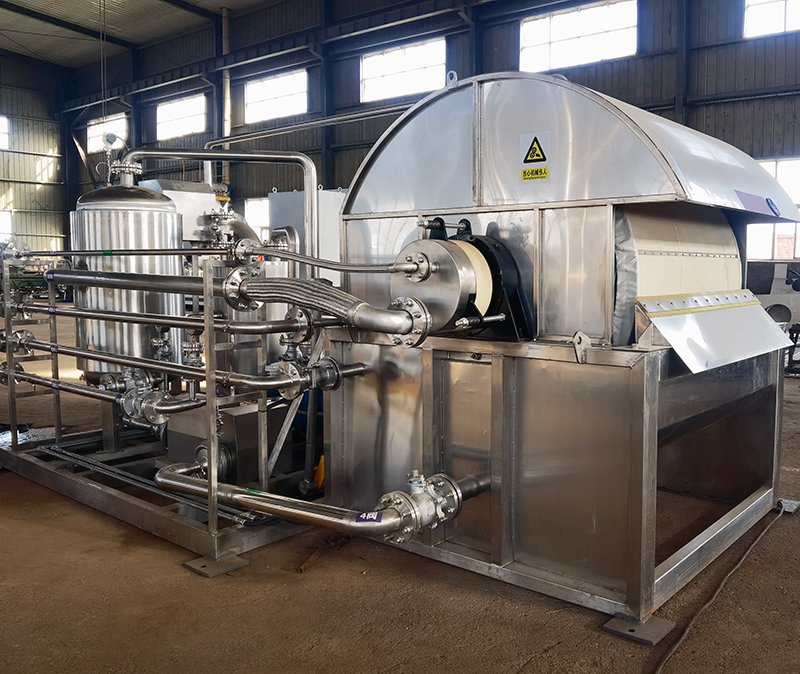
Roll Discharge Vacuum Drum Filter
A discharge roll rotates relative to the drum, peeling off filter cake through friction and slight compression. With no rigid contact, this is a gentle discharge method.
Application Scenarios
Crystal recovery in pharmaceutical manufacturing, filtration of fine chemical powders, and separation of starch/protein powder in the food industry.
Advantages & Disadvantages
| Advantages | Disadvantages |
| Flexible discharge completely preserves filter cake particle structure | Discharge efficiency is highly dependent on filter cake adhesion |
| No scraper wear, resulting in low equipment failure rates | Not suitable for high solid-content materials or thick filter cakes |
| Low noise and stable operation | Fine powders tend to adhere to the discharge roll, requiring frequent cleaning |
Suitable Operating Conditions
- Solid content of material: 3%–15%
- Filter cake properties: Friable crystals, fine powders, requiring intact particle morphology
- Operating requirements: High standards for product purity and particle integrity
Operational Precautions
- Control the pressure between the discharge roll and drum. Excessive pressure crushes filter cake, while insufficient pressure leads to discharge failure.
- Install purge systems at the discharge roll for fine powder materials to prevent adhesion.
- Regularly calibrate discharge roll speed to ensure synchronization with drum speed.
Belt Discharge Vacuum Drum Filter
The filter cloth is an endless, foldable belt. In the discharge zone, the belt flips via a folding mechanism, and filter cake detaches due to gravity and bending stress. The cloth can be cleaned online without shutdowns for maintenance.
Application Scenarios
Ore slurry filtration in metallurgical processing, deep dehydration of sludge in wastewater treatment plants, and filtration of impurity-laden slurries in chemical production.
Advantages & Disadvantages
| Advantages | Disadvantages |
| Online cloth cleaning ensures stable filtration efficiency | Complex folding mechanism requires specialized maintenance expertise |
| Excellent compatibility with impurity-laden materials; low clogging risk | Large equipment footprint |
| Produces filter cake with low moisture content and ensures thorough discharge | High initial investment and operational energy consumption |
Suitable Operating Conditions
- Solid content of material: 8%–30%
- Filter cake properties: High impurity content, prone to filter cloth clogging, requiring low moisture content
- Operating mode: 24/7 continuous operation
Operational Precautions
- Regularly inspect hinges and transmission components of the folding mechanism to prevent jamming.
- Control water pressure of the online cleaning system to avoid filter cloth damage.
- Use high-strength, fold-resistant filter cloths, as folded areas are prone to fatigue failure.
Pneumatic Discharge Vacuum Drum Filter
Pre-installed nozzles inside the drum eject compressed air instantaneously in the discharge zone, causing the filter cloth to expand rapidly and vibrate. Filter cake detaches due to inertia, making this a contact-free discharge method.
Application Scenarios
Recovery of high-value fine powders, filtration of corrosive materials, and material separation in sterile pharmaceutical manufacturing.
Advantages & Disadvantages
| Advantages | Disadvantages |
| Contact-free discharge eliminates filter cloth wear, maximizing service life | High compressed air consumption leads to elevated operational costs |
| Suitable for corrosive and sterile operating conditions | Not suitable for highly viscous materials with strong adhesion |
| Simple structure with no mechanical discharge components | Discharge performance is highly sensitive to air pressure stability |
Suitable Operating Conditions
- Solid content of material: 2%–20%
- Filter cake properties: Low viscosity, loose powders, high-value materials
- Operating requirements: Sterile environment, corrosion resistance, low maintenance frequency
Operational Precautions
- Maintain stable compressed air pressure; pressure fluctuations cause incomplete discharge or filter cloth damage.
- Clean nozzles regularly to prevent clogging by fine powders and ensure consistent air jet performance.
- For sterile applications, filter and sterilize compressed air before use.
Classification by Installation Structure
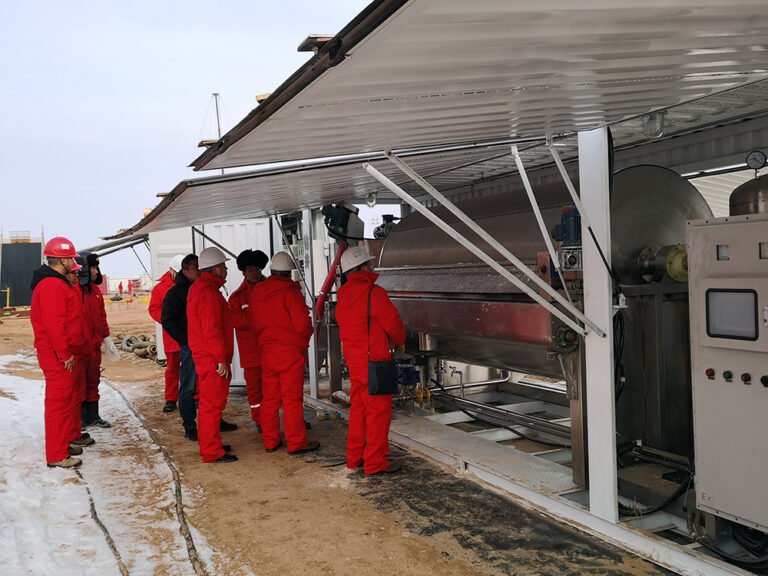
Classified by installation structure, vacuum drum filters have two variants. Indoor fixed skid-mounted units integrate multiple systems on a steel skid, secured with anchor bolts. Ideal for continuous indoor production lines in chemical, pharmaceutical sectors, they ensure stable operation. Outdoor containerized mobile units, housed in shipping containers, are trailer-transportable, workshop-free, and ready for use on arrival, designed for outdoor temporary tasks like oil drilling and mine tailings treatment.
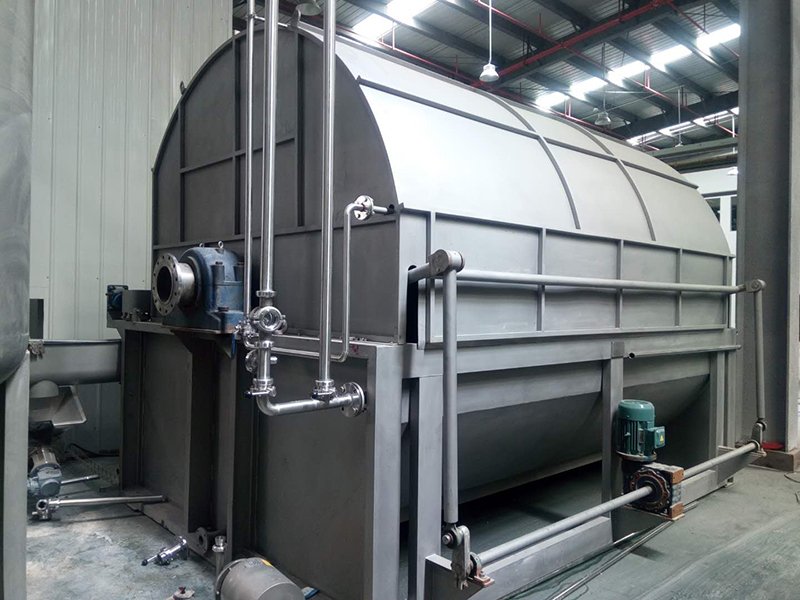
Indoor Fixed Skid-Mounted Vacuum Drum Filter
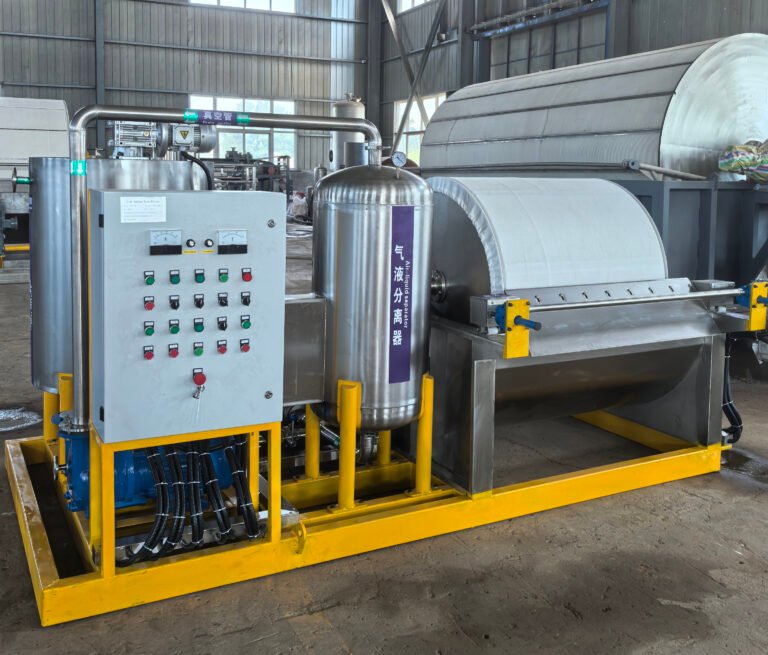
This is an integrated unit that assembles core components—including the filtration unit, vacuum system, pipelines, valves, and control system—onto a unified steel skid. Anchored firmly to the factory floor with foundation bolts, the skid is non-mobile. Featuring a compact layout and organized piping, it is specifically designed for fixed-station operations in indoor workshops. Typically connected seamlessly to the plant’s existing slurry transfer and post-filtration systems (e.g., drying and storage units), it enables continuous assembly-line operations and stands as the most widely adopted indoor installation type in industrial production.
Application Scenarios
It is extensively used in indoor fixed production lines, such as filtration of resins and pigment slurries in the chemical industry, starch purification and syrup clarification in the food industry, crystal recovery and liquid medicine filtration in the pharmaceutical industry, and concentrate slurry solid-liquid separation in the metallurgical industry. Typical applications include continuous clarification stations in fine chemical workshops, sterile material separation plants in pharmaceutical factories, and starch deep-processing lines in food processing facilities.
Advantages & Disadvantages
Advantages
- High integration and easy installation—only requiring connection of utilities and upstream/downstream pipelines upon arrival, drastically shortening workshop commissioning cycles.
- Stable fixed installation ensures minimal vibration during operation, making it ideal for long-term continuous runs.
- Customizable skid dimensions and component layouts based on workshop space and production needs, ensuring compatibility with assembly-line integration.
- Organized maintenance space and centralized piping facilitate convenient daily inspections, component repairs, and routine maintenance, resulting in low failure rates.
Disadvantages
- Non-mobile once installed, lacking flexibility. Reconfiguration or maintenance relocation requires disassembly and reinstallation, which is time-consuming and labor-intensive.
- Strict requirements for installation environments—needing enclosed indoor workshops with dustproof, rainproof, and temperature-controlled features, leading to high upfront costs for workshop construction.
- High component integration means local malfunctions may affect overall operation, imposing stringent standards for initial commissioning and system compatibility.
Suitable Operating Conditions
- Material Specifications: Compatible with various slurries with a solid content of 5%–40%, including non-viscous, low-viscous, and some medium-viscous materials. It accommodates diverse filter cake properties such as friable crystals, fine powders, and standard particles.
- Operating Environment: Indoor conditions with temperatures ranging from ambient to 150°C (high-temperature material processing is feasible with insulated layers). It requires stable temperatures, protection from rain, snow, and dust, and a relative humidity below 85%.
- Production Requirements: Suited for 24/7 continuous production with stable single-station throughput, ideal for scenarios demanding high operational stability and automation levels.
Operational Precautions
- Ensure the skid is horizontally aligned and securely fastened with foundation bolts during installation to prevent pipeline loosening or leakage caused by operational vibration.
- Regularly inspect the connection status between the skid and the floor. Reinforce or replace gaskets promptly if loosening or corrosion is detected.
- Allow sufficient expansion space in pipelines connecting to upstream and downstream equipment to avoid pipeline damage from vibration or thermal expansion/contraction during operation.
- Maintain a well-ventilated and dry indoor environment to prevent short circuits in electrical components and corrosion of metal parts due to moisture.
- Regularly clean material residues and debris beneath and around the skid to ensure unobstructed equipment heat dissipation and inspection access.
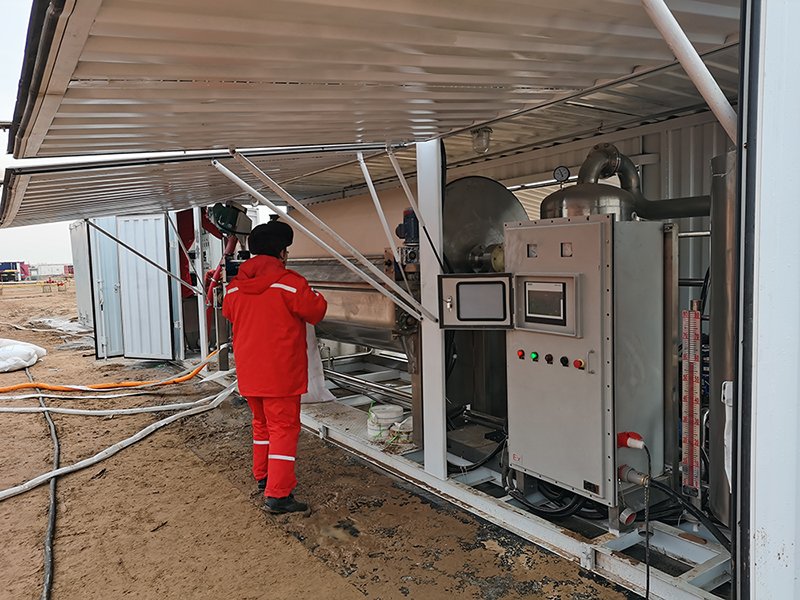
Outdoor Mobile (Containerized Skid-Mounted) Vacuum Drum Filter
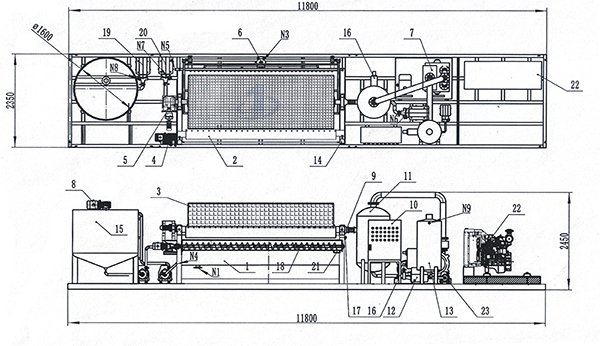
This filter integrates a complete set of equipment—including the filtration drum, vacuum unit, slurry tank, control system, and power unit—into a standard shipping container (commonly 20-foot or 40-foot). The container features a built-in weatherproof enclosure that protects against rain, dust, and sun exposure. Equipped with towable wheels or lifting lugs at the base, it can be transported to any outdoor job site via trailer. Requiring no fixed installation, it is ready for operation immediately after on-site connection to temporary utilities. Its core strengths lie in excellent mobility and wide environmental adaptability.
Application Scenarios
It is primarily used in outdoor, workshop-free applications such as solid-liquid separation of drilling mud at oilfield sites, temporary tailings treatment in open-pit mines, emergency sludge dewatering at wastewater treatment plants, temporary maintenance slurry processing in chemical parks, and mobile operations at small-scale mines in remote areas. Typical use cases include drilling mud purification near oilfield platforms, wastewater treatment at temporary spoil heaps in open-pit mines, and emergency solid-liquid separation for pollution incidents.
Advantages & Disadvantages
Advantages
- Exceptional mobility—can be quickly relocated to different job sites as operational needs change, ideal for decentralized and temporary tasks.
- The container’s integrated protective housing eliminates the need for additional workshop construction, significantly reducing upfront costs for outdoor operations.
- Higher integration level with all components housed internally and pipelines arranged in a concealed layout; offers strong resistance to sand, wind, rain, and sun exposure, suitable for harsh outdoor environments.
- Simple installation and commissioning—only requires basic connection of slurry inlet/outlet and temporary power supply on-site, enabling full operation within 1–2 days.
Disadvantages
- Limited internal container space restricts maintenance access and component replacement, increasing maintenance difficulty.
- Equipment throughput is relatively fixed due to container size constraints, making large-scale customization challenging.
- Special care must be taken to secure all equipment during transportation to prevent component displacement or damage.
- Additional insulation, cooling, or dehumidification devices are required for outdoor operation in extreme low/high temperatures or high humidity environments; otherwise, equipment efficiency may be compromised.
Suitable Operating Conditions
- Material Specifications: Compatible with various slurries with a solid content of 3%–35%, especially suitable for ore pulp, drilling mud, and sludge in field operations, with good tolerance for certain levels of impurities.
- Operating Environment: Outdoor open-air conditions; adaptable to temperatures ranging from -10°C to 45°C and resistant to moderate wind, rain, and sand erosion.
- Production Requirements: Suited for intermittent and temporary operations with flexible single-batch throughput, ideal for scenarios requiring high mobility and rapid commissioning capability.
Operational Precautions
- Secure all internal components firmly, close all valves, and seal slurry inlet/outlet ports before transportation to prevent leakage or component damage during transit.
- Select a level ground surface for on-site placement and stabilize the container with sleepers or support feet to avoid operational instability caused by tilting.
- Regularly inspect the container’s sealing performance during outdoor operation to prevent rainwater and dust from entering and damaging electrical components and the main equipment body.
- Install insulation layers on key parts such as the vacuum system and pipelines in low-temperature environments to prevent material freezing and equipment component damage.
- Plan transportation routes in advance before mobile operations; verify height and width restrictions along the route to avoid oversize issues with the container and equipment.
Classification by Operating Conditions
Classified by operating conditions, vacuum drum filters are mainly divided into four types: corrosion-resistant, heated, precoat, and fully sealed low-temperature dewaxing. Corrosion-resistant models adopt specialized anti-corrosion materials, suitable for acidic, alkaline, and solvent-containing materials. Heated units feature built-in heating structures, enabling simultaneous filtration and drying. Precoat types enhance precision via a filter aid coating, ideal for fine-particle materials. Fully sealed low-temperature dewaxing models use a sealed design for low-temperature environments, focusing on wax material separation. Each type is tailored to meet distinct harsh operating requirements.
Corrosion-Resistant Vacuum Drum Filter
This model is engineered for handling corrosive media, with wetted components (drum, filter cloth, pipes, seals) made of specialized anti-corrosion materials such as stainless steel, titanium alloy, or fluorine-lined/ rubber-lined substrates. It maintains structural integrity and operational stability when exposed to harsh corrosive substances.
Application Scenarios
Widely used in acid/alkali wastewater treatment in chemical plants, salt chemical slurry filtration, pickling sludge dewatering in metallurgical processes, corrosive liquid medicine filtration in pharmaceutical production, and solvent-containing material separation in petrochemical industries.
Advantages & Disadvantages
| Advantages | Disadvantages |
| Excellent corrosion resistance for prolonged service life in harsh environments | High upfront cost due to premium anti-corrosion materials |
| Broad compatibility with acidic, alkaline, and solvent-based slurries | Anti-corrosion linings (e.g., rubber) are prone to aging under temperature fluctuations |
| Leak-proof design ensures safe operation and workplace protection | Higher maintenance costs, requiring specialized anti-corrosion lubricants and spare parts |
Suitable Operating Conditions
- Material Properties: Acidic, alkaline, or solvent-containing slurries with solid content of 2%–35%; low to medium viscosity.
- Environment: Indoor or sheltered outdoor settings; temperature range of -5℃–80℃ (rubber-lined) or -10℃–150℃ (metal alloy); away from strong oxidants.
- Production Requirements: Continuous or batch operations with strict demands on equipment corrosion resistance and operational safety.
Operational Precautions
- Match the equipment material strictly to the corrosivity of the processed material; avoid over-range usage.
- Regularly inspect wetted components for pitting, cracks, or lining detachment, and repair/replace damaged parts promptly.
- Flush the equipment thoroughly with neutral cleaning fluid after shutdown to prevent residual corrosive material from causing long-term damage.
- Use non-carbon steel tools during maintenance to avoid scratching anti-corrosion surfaces.
Heated Vacuum Drum Filter
Equipped with built-in heating jackets or heating tubes inside the drum, this filter uses steam or thermal oil as the heat source to heat the drum and filter cake during operation. It integrates filtration and drying functions to reduce the moisture content of the final filter cake, with precise temperature control via a dedicated regulation system.
Application Scenarios
Ideal for high-moisture material filtration-drying in chemical plants (e.g., resin, pigment cake dewatering), thermal-sensitive material processing in food factories (e.g., milk powder, starch slurry), crystal drying in pharmaceutical production, and battery material purification in new energy industries.
Advantages & Disadvantages
| Advantages | Disadvantages |
| Combines filtration and drying in one unit, simplifying production processes and saving floor space | Requires supporting heat source systems (boilers, thermal oil furnaces), increasing initial investment and energy consumption |
| Precise temperature control preserves product quality for thermal-sensitive materials | Complex heating structure leads to higher manufacturing and maintenance costs |
| Significantly reduces filter cake moisture content, lowering subsequent transportation and processing costs | Accelerated filter cloth aging due to continuous heating, increasing replacement frequency |
Suitable Operating Conditions
- Material Properties: Slurries requiring low-moisture filter cakes; solid content of 5%–30%; non-to medium viscosity; heat-resistant up to 50℃–120℃.
- Environment: Indoor workshops with good ventilation; ambient temperature of 10℃–50℃.
- Production Requirements: Continuous operations with strict filter cake moisture standards (typically below 10%).
Operational Precautions
- Set heating parameters strictly according to the material’s heat resistance limit to avoid product deterioration or combustion.
- Regularly check the sealing of heating jackets/tubes to prevent steam or thermal oil leakage.
- Select high-temperature resistant filter cloths and inspect their condition regularly for timely replacement.
- Purge air from the heating system before startup to ensure uniform heating efficiency.
Precoat Vacuum Drum Filter
This filter forms a porous precoat layer on the filter cloth surface using filter aids (e.g., diatomaceous earth, perlite) before filtration. The precoat traps fine particles to improve filtration precision, with fresh filter aid continuously supplemented during operation to maintain stable performance. It is compatible with scraper or pneumatic discharge methods.
Application Scenarios
Commonly applied in clarification filtration of pigments and dyes in fine chemical plants, high-purity material processing in electronic component manufacturing, juice and beverage clarification in food factories, sterile liquid medicine filtration in pharmaceutical production, and high-purity water treatment.
Advantages & Disadvantages
| Advantages | Disadvantages |
| Ultra-high filtration precision, capable of capturing micron-level particles for clear filtrate | Consumes filter aids continuously, increasing operational material costs |
| Precoat layer protects filter cloth from clogging, extending its service life | Pre-coating process prolongs production preparation time, unsuitable for frequent start-stop batch operations |
| Versatile, adaptable to different materials by changing filter aid types | Scraper discharge generates mixed waste of filter aid and cake, increasing solid waste disposal volume |
Suitable Operating Conditions
- Material Properties: Slurries with fine particles (1–10μm) and high clarity requirements; solid content of 1%–20%; low viscosity.
- Environment: Clean indoor workshops; ambient temperature of 5℃–80℃; low dust levels to avoid precoat contamination.
- Production Requirements: Continuous operations with filtrate clarity standards of ≥99.5%.
Operational Precautions
- Control the particle size and thickness of the precoat layer strictly to ensure uniform coverage without filtration dead zones.
- Supplement filter aid at a steady rate during operation to maintain consistent precoat thickness and filtration precision.
- Adjust scraper gap regularly for thorough cake-precoat removal; avoid excessive pressure that may damage the filter cloth.
- Clean the filter aid feeding system promptly after shutdown to prevent solidification and pipeline clogging.
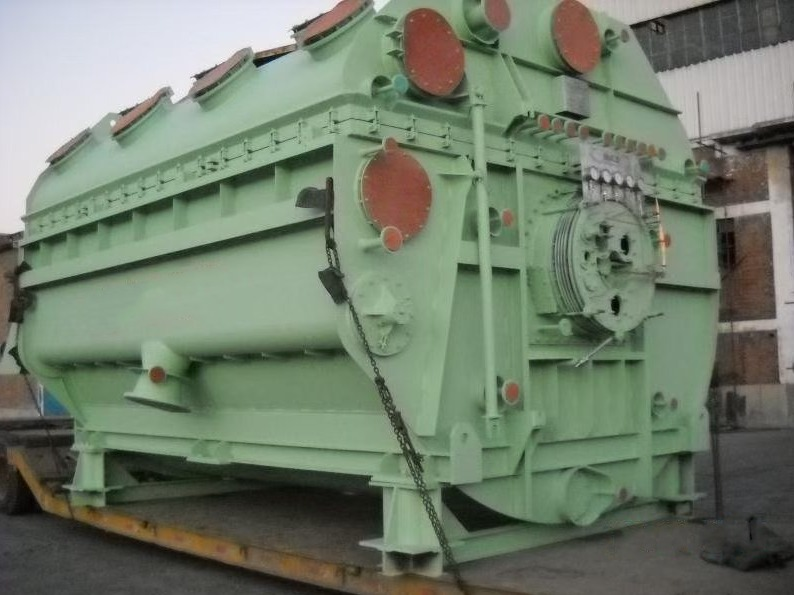
Fully Sealed Low-Temperature Dewaxing Vacuum Drum Filter
Designed with a fully enclosed structure and low-temperature control system, this filter is specialized for separating wax-containing materials. It maintains stable low operating temperatures to prevent wax melting, ensuring efficient solid-liquid separation of wax particles. The sealed design prevents cold loss and avoids environmental contamination.
Application Scenarios
Mainly used in wax-containing oil slurry separation in petrochemical refineries, paraffin recovery from wax-bearing wastewater, beeswax purification in the cosmetics industry, and wax removal from lubricating oil production processes.
Advantages & Disadvantages
| Advantages | Disadvantages |
| Fully sealed structure minimizes cold loss, ensuring stable low-temperature operation for efficient dewaxing | Requires supporting refrigeration systems, increasing energy consumption and equipment complexity |
| Prevents wax melting during filtration, ensuring high-purity wax cake recovery | Narrow application scope, only suitable for wax-containing material separation |
| Sealed design avoids odor leakage and environmental pollution, meeting strict emission standards | High maintenance requirements for both the filter and refrigeration system; professional technicians are needed |
Suitable Operating Conditions
- Material Properties: Wax-containing slurries; operating temperature of -10℃–15℃ (adjustable based on wax melting point); solid content of 3%–25%.
- Environment: Indoor workshops with good insulation; ambient temperature controlled within 0℃–30℃ to reduce cold loss.
- Production Requirements: Continuous or batch operations focusing on high-purity wax recovery.
Operational Precautions
- Calibrate the low-temperature control system regularly to maintain stable operating temperatures matching the wax melting point.
- Inspect the sealing performance of the enclosure frequently to prevent cold loss and ambient air infiltration that may cause wax melting.
- Use low-temperature resistant lubricants and seals to ensure reliable equipment operation in cold environments.
- Clean the drum surface thoroughly after shutdown to remove residual wax deposits and prevent hardening that may affect subsequent operation.
Chapter 3: Core Functions of Vacuum Drum Filter
Efficient particle retention, dehydration, drying, and purification
- It traps solid particles in the slurry using the filter cloth covering the drum, forming a filter cake layer.
- The vacuum negative pressure continuously extracts residual liquid from the filter cake, reducing the moisture content of the solids to meet the requirements for subsequent transportation, storage, or further processing.
- A dedicated washing and spray system can be integrated to rinse the filter cake with clean water or specialized washing liquid, removing surface-adhered impurities or soluble contaminants and improving the purity of the solid product.
Typical Applications: Solidification treatment of oil drilling sludge, mineral powder recovery, purification of chemical crystalline materials, etc.
Precision filtration, clarification, and filtrate recovery
- Driven by vacuum pressure, the liquid in the slurry passes through the filter cloth pores and is rapidly drawn into the filtrate collection system inside the drum.
- It efficiently captures suspended solid impurities in the slurry, reduces the turbidity of the filtrate, and produces a clarified liquid product.
- The clarity of the filtrate can be controlled by adjusting parameters such as filter cloth precision and vacuum level, ensuring compliance with standards for subsequent reuse or discharge up to specification.
Typical Applications: Purification and reuse of produced water in oil extraction, pretreatment of industrial wastewater, clarification filtration of chemical feed liquids, etc.
Chapter 4: Core working principle
The core working principle of a vacuum drum filter is leveraging the pressure differential generated by vacuum suction to drive slurry for solid-liquid separation. Meanwhile, the continuous rotation of the drum enables the integrated, sequential execution of four key processes: adsorption, filtration, dehydration, and discharge.
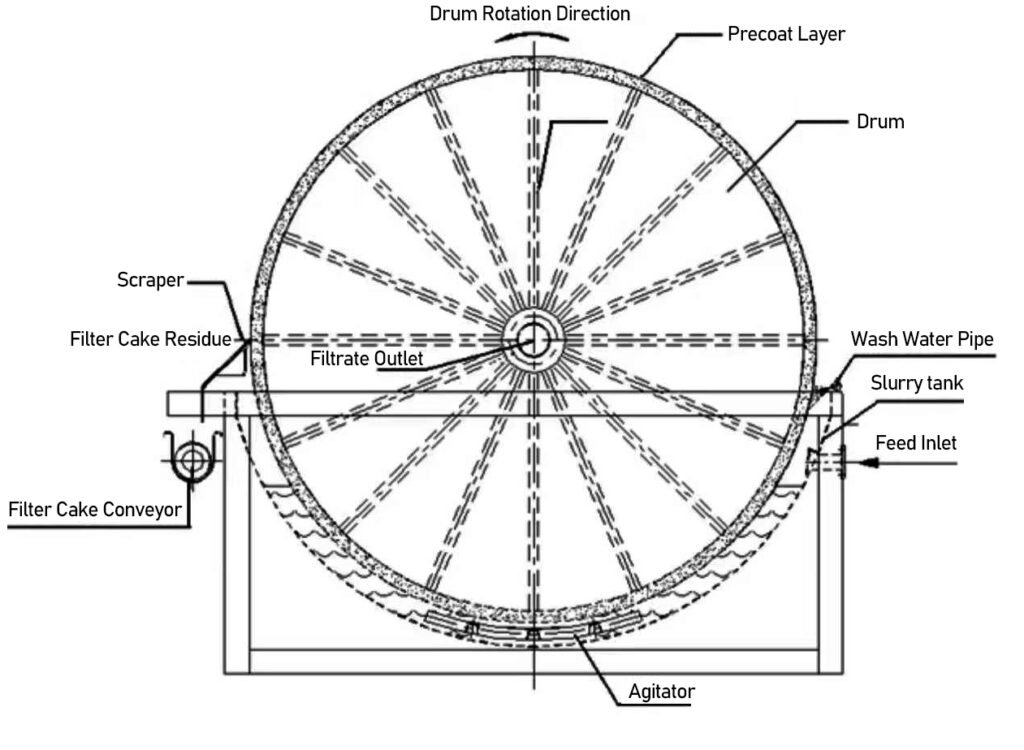
While the underlying principle is fairly straightforward, the stable and efficient operation of the equipment hinges entirely on the precise coordination and seamless collaboration of every single component. What’s more, component parameters must be customized to match specific operating conditions.
Chapter 5: Key Components of a Vacuum Drum Filter
The core components of a vacuum drum filter are engineered around its continuous solid-liquid separation workflow, with each part working in tandem to ensure stable, high-efficiency operation. The critical components are as follows:
Rotating Drum
As the equipment’s primary load-bearing component, the drum is coated with filter cloth on its surface and equipped with a filtrate collection chamber and a rotary valve inside. The drum’s rotation directly drives the continuous execution of all processes: adsorption, filtration, dehydration and discharge. Its material, such as stainless steel or rubber-lined steel, must be compatible with the corrosive and abrasive conditions of different operating environments.
Filter Cloth
The filter cloth acts as the core medium for solid-liquid separation, trapping solid particles while allowing liquid to pass through. The tensioning device secures the filter cloth, ensuring it fits tightly against the drum surface to prevent slurry leakage and filtration inefficiency. It also facilitates easy cloth replacement and maintenance.
Vacuum System
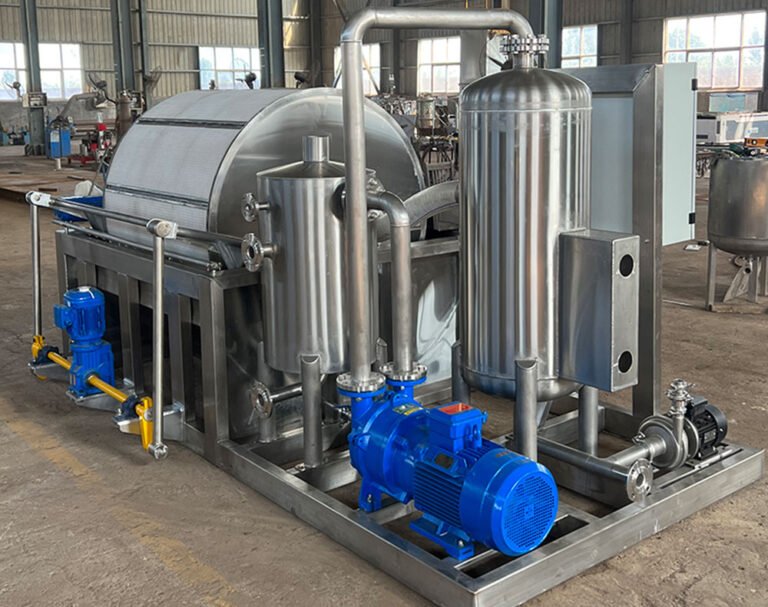
This system consists of a vacuum pump, vacuum pipelines and a filtrate collection tank, serving as the key source of negative pressure driving force. By creating stable negative pressure inside the drum, it pushes liquid in the slurry through the filter cloth and into the collection chamber, thus achieving solid-liquid separation and filter cake dehydration.
Rotary Valve
This is the core control component for process switching, connected to the filtrate chamber inside the drum. Its zoned design precisely controls the on-off status of vacuum in different drum sections during rotation, enabling the sequential execution of adsorption-filtration, filter cake washing, dehydration-drying and cake discharge-regeneration processes.
Slurry Tank & Agitation Device
The slurry tank stores the slurry to be processed, ensuring the drum surface is continuously submerged for slurry adsorption. The built-in agitation device prevents solid particles in the slurry from settling and stratifying, maintaining uniform slurry concentration to enhance filtration performance.
Discharge Device
Common designs include scraper discharge or roller discharge mechanisms. It scrapes or peels off the fully dehydrated filter cake from the drum surface, enabling continuous cake discharge. This also restores the filter cloth’s filtration capacity, allowing it to enter the next operational cycle.
Chapter 6: Conclusion
This article provides a comprehensive overview of the vacuum drum filter. It covers everything from its classification, including discharge methods, installation structures and operating condition adaptations, to its core functions that encompass solid product retention and purification as well as liquid product filtration and recovery. It also delves into the filter’s fundamental working principle, driven by vacuum pressure difference and continuous drum rotation to enable sequential operations, along with details on its key components, offering you a systematic understanding of the equipment.
We hope this article helps deepen your knowledge of vacuum drum filters. If you wish to learn more about solid-liquid separation, feel free to contact us. We’ll share additional industry-specific technical insights tailored to your interests.
Yinuo Rotary Vacuum Drum Filter——Trusted Solid-Liquid Separation Equipment Provider in ChinaYinuo has focused on filtration equipment manufacturing for years, delivering efficient and dependable rotary vacuum drum filter solutions to clients across various industrial sectors. Our standard rotary vacuum drum filters cover processing capacities from 0.5 tons/hour to 50 tons/hour. Meanwhile, we offer customized configurations (including filter cloth materials, vacuum system parameters, and component materials) tailored to specific slurry properties and operating conditions, to boost separation efficiency and reduce maintenance costs.
Reach out to collaborate with our technical team on your filtration needs. You will get a tailored rotary vacuum drum filter solution designed for your production process.