RVDF WEAR PLATE & BRIDGE PLATE
The wear plate & bridge plate (also referred to as a distributor head or distribution valve) is a core component of the rotary vacuum drum filter. Composed of a rotating disc (wear plate) and a stationary disc (bridge plate, Valve bridging or bridge blocks, ) that are tightly sealed together, it precisely controls the switching of process stages such as filtration, drying, and cake discharge during the drum’s rotation, and directly determines the filtration efficiency and operational stability of the equipment.
Sealing Performance & Wear Resistance: Abrasion-resistant sealing materials shall be used between the rotating and stationary discs, with strict control over fitting clearance to prevent vacuum leakage or air cross-contamination (which would otherwise reduce filtration efficiency and increase filter cake moisture content); meanwhile, the contact surfaces of both discs are typically treated with hard alloy spraying or ceramic coating to withstand long-term high-speed friction and extend service life.
- Machine models vary by application, so do the wear plates & bridge plate we use. Contact us for custom solutions.
- We can design them for you or manufacture them according to your drawings.
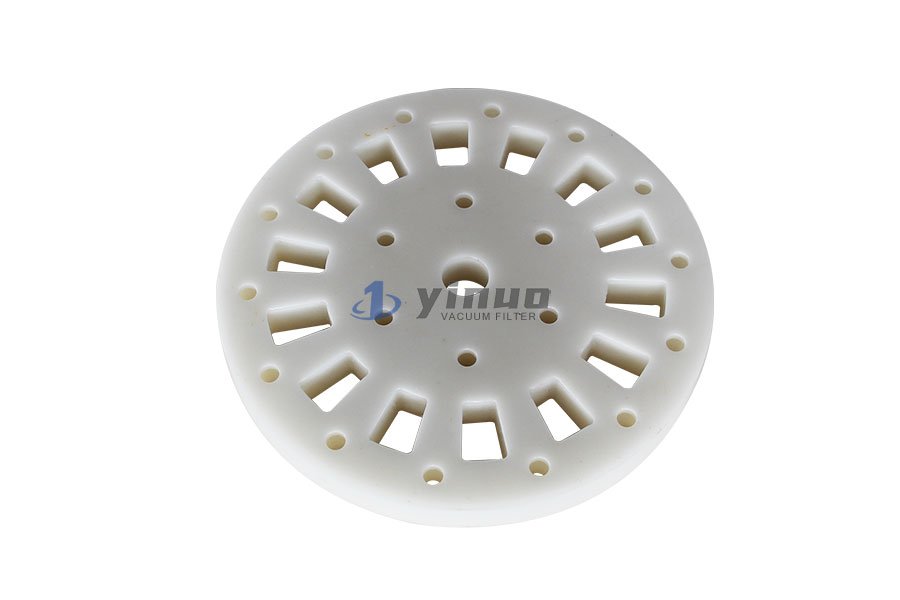
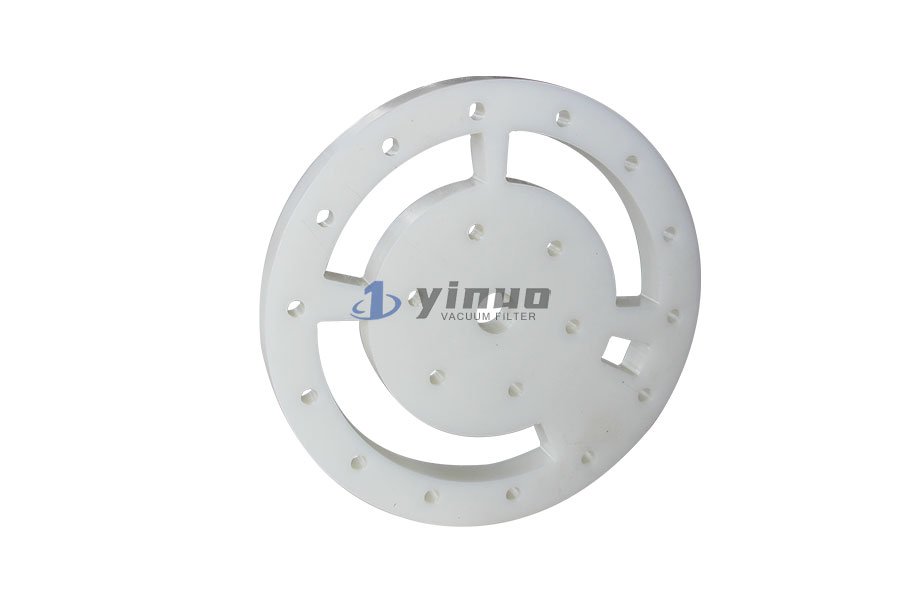
the difference between an WEAR PLATE and a BRIDGE PLATE

BRIDGE PLATE – stationary disc
Mounting Position: Fixed to the filter frame or end cover, and remains stationary as the drum rotates.
Core Structure: Integrated with vacuum and compressed air channels that connect to the external vacuum system and blowback system respectively. The bridge plate surface is machined with specially shaped air chamber zones, each corresponding to a distinct stage of the filtration process.
Function: Acting as the air distribution reference end, it supplies the corresponding vacuum suction or blowback pressure to different working zones of the drum via the air chamber zones on its surface.
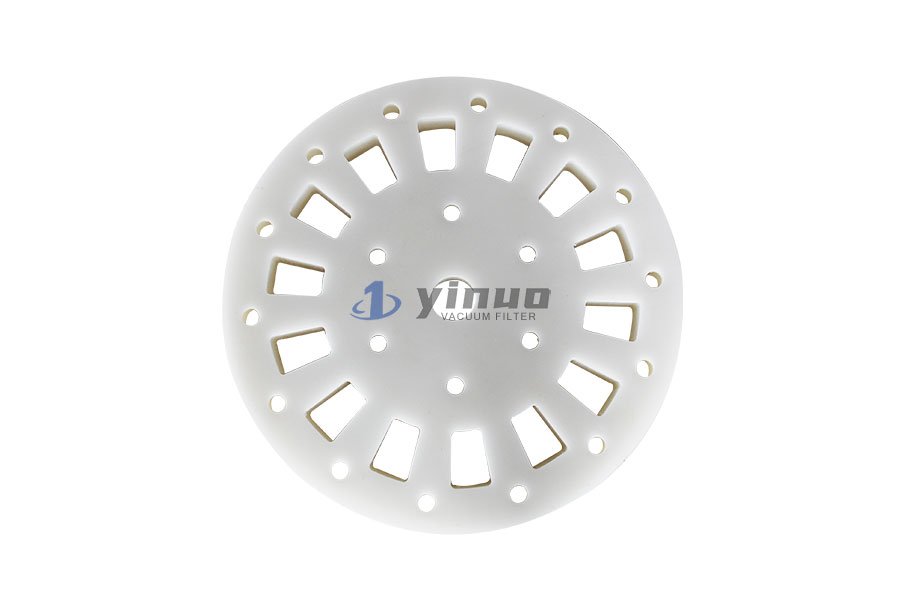
WEAR PLATE – rotating disc
Mounting Position: Rigidly connected to the drum’s main shaft or end plate, rotating synchronously with the drum.
Core Structure: Multiple filtrate chamber ports are evenly spaced on the disc surface, each corresponding to an independent filtrate chamber on the drum shell, and the precision-machined surface ensures airtight sealing with the stationary disc.
Function: As it rotates with the drum, its filtrate chamber ports align sequentially with the stationary disc’s air chamber zones: vacuum zones create negative pressure for filtration and cake drying, while compressed air zones use positive pressure for blowback cake discharge.
How to choose RVDF WEAR PLATE & BRIDGE PLATE
Material Compatibility
Select materials based on the corrosiveness of the slurry (e.g., acids, alkalis, organic solvents):
- Standard applications: PTFE (Polytetrafluoroethylene).
- Highly corrosive scenarios: Ceramic or cemented carbide.
Note: The material must balance wear resistance (for long-term friction between rotating/stationary plates) and sealing performance (to prevent airflow leakage).
Air Chamber Design Compatibility
The shape and angle of air chambers must match the equipment’s filter cake thickness and drum rotation speed (e.g., thicker cakes require longer suction air chambers).
If switching suppliers, provide the original equipment’s process time allocation sheet (ratio of suction/ drying/discharging cycles) to ensure the air chamber design is compatible.
Dimensional Precision
Ensure full alignment of bolt holes, spindle connection holes, and air chamber geometry/size with the original equipment (especially for custom-built units).
Control the fit gap between rotating and stationary plates to a micrometer level (typically ≤0.05mm) — otherwise, vacuum leakage is likely.
Sealing & Wear-Resistance Details
Inquire whether the plate surface has a wear-resistant coating (e.g., ceramic spray) or a seal groove + O-ring design.
Request a service life guarantee (typically ≥8,000 hours of continuous operation).